Business & Entrepreneurship Quiz โ 40 Questions
From startup fundamentals to global business empires, 40 questions that test whether you have what it takes to think like an entrepreneur. Every answer includes real-world examples from India and the world.
๐ What's Inside
Why Business Literacy Matters
India is the world's 3rd largest startup ecosystem with over 100,000 recognised startups and 100+ unicorns. Understanding business fundamentals is no longer just for MBA students โ it is essential for anyone who wants to build wealth, make smart career decisions, or simply understand the economy that shapes daily life.
Whether you dream of founding a startup, climbing the corporate ladder, or investing wisely, business knowledge gives you an unfair advantage. This quiz covers the concepts, strategies, and stories that separate business-literate individuals from the rest.
Round 1: Business Fundamentals
Every great business is built on strong fundamentals. This round covers essential business concepts from marketing mix to financial statements, supply and demand to competitive strategy.
Q1. What are the 4 Ps of Marketing?
โ Answer: Product, Price, Place, Promotion (the "Marketing Mix")
Developed by E. Jerome McCarthy in 1960: Product (what you sell), Price (how much you charge), Place (where and how you distribute), Promotion (how you communicate and advertise). Modern marketers have expanded this to 7 Ps, adding People, Process, and Physical Evidence. Every successful marketing strategy addresses all four elements.
Q2. What is GDP (Gross Domestic Product)?
โ Answer: The total monetary value of all goods and services produced within a country's borders in a specific period
GDP measures economic output and is the most common indicator of a nation's economic health. India's GDP is approximately $3.7 trillion (2024), making it the 5th largest economy globally. The US ($25.5T), China ($17.7T), Germany ($4.1T), and Japan ($4.2T) are the top 4. India is projected to become the 3rd largest economy by 2027.
Q3. What is a business plan?
โ Answer: A formal document outlining a company's goals, strategies, target market, financial projections, and operational plan
A business plan typically includes an executive summary, company description, market analysis, organisation structure, product/service line, marketing strategy, and financial projections. Investors and banks require business plans before funding. While some successful startups (like many Y Combinator companies) started without formal plans, the planning process itself forces founders to think critically.
Q4. What is ROI (Return on Investment)?
โ Answer: A performance measure calculating the gain or loss from an investment relative to its cost: ROI = (Net Profit รท Cost of Investment) ร 100
If you invest โน1,00,000 and earn โน1,30,000, your ROI is 30%. ROI helps compare the efficiency of different investments. A marketing campaign costing โน50,000 that generates โน2,00,000 in revenue has a 300% ROI. While widely used, ROI has limitations โ it does not account for time (a 30% ROI in 1 year is much better than 30% over 10 years).
Q5. What is a SWOT analysis?
โ Answer: A strategic planning framework analysing Strengths, Weaknesses, Opportunities, and Threats
SWOT was developed at Stanford Research Institute in the 1960s. Strengths and Weaknesses are internal (controllable), while Opportunities and Threats are external (market forces). For example, a new restaurant: Strength (unique menu), Weakness (limited parking), Opportunity (growing food delivery market), Threat (established competitors). SWOT helps identify strategic priorities.
Q6. What is the difference between B2B and B2C?
โ Answer: B2B (Business-to-Business) sells to other businesses; B2C (Business-to-Consumer) sells directly to end consumers
B2B examples: Salesforce (CRM software), Tata Steel (supplies to manufacturers), Zoho (business software). B2C examples: Amazon (retail), Swiggy (food delivery), Netflix (streaming). B2B sales cycles are longer, deal values are higher, and decisions involve multiple stakeholders. B2C focuses on emotional appeal, brand awareness, and volume.
Q7. What is supply and demand?
โ Answer: The economic model where price is determined by the relationship between how much of a product is available (supply) and how much consumers want it (demand)
When demand exceeds supply, prices rise (e.g., concert tickets for popular artists). When supply exceeds demand, prices fall (e.g., seasonal vegetables after harvest). This fundamental principle governs virtually every market from real estate to cryptocurrency. Adam Smith called it the "invisible hand" that guides free markets.
Q8. What is inflation?
โ Answer: A sustained increase in the general price level of goods and services, reducing the purchasing power of money
If inflation is 7%, something costing โน100 today will cost โน107 next year. The RBI targets inflation at 4% (ยฑ2%). Inflation is measured by CPI (Consumer Price Index) and WPI (Wholesale Price Index). Moderate inflation (2โ4%) is healthy for economic growth. Hyperinflation (above 50%/month) devastates economies โ Zimbabwe, Venezuela, and Weimar Germany are historical examples.
Q9. What is KPI (Key Performance Indicator)?
โ Answer: A measurable value that demonstrates how effectively a company is achieving its key business objectives
Examples: Revenue growth rate, customer acquisition cost (CAC), customer lifetime value (LTV), employee turnover rate, net promoter score (NPS), and conversion rate. Good KPIs are specific, measurable, achievable, relevant, and time-bound (SMART). Peter Drucker said, "What gets measured, gets managed" โ KPIs turn business goals into trackable metrics.
Q10. What is the difference between profit and revenue?
โ Answer: Revenue is total income from sales; profit is what remains after deducting all expenses
Revenue (top line) = total sales. Gross profit = Revenue โ Cost of Goods Sold. Operating profit = Gross Profit โ Operating Expenses. Net profit (bottom line) = Operating Profit โ Taxes โ Interest. A company can have high revenue but low profit (e.g., Amazon was profitable for only a small fraction of its existence). Profit margins vary hugely: software (20โ30%), retail (2โ5%), airlines (1โ3%).
Round 2: Famous Entrepreneurs & Companies
Behind every iconic company is a visionary founder. This round tests your knowledge of the entrepreneurs who built the world's most successful businesses โ from garages and dorm rooms to trillion-dollar empires.
Q1. Who founded Amazon?
โ Answer: Jeff Bezos, in 1994, starting as an online bookstore from his garage in Bellevue, Washington
Bezos left a lucrative Wall Street career to start Amazon. He chose books as the first product category because of the massive number of titles available. Amazon's revenue exceeded $575 billion in 2023. Bezos' shareholder letters are considered masterclasses in business strategy. His "Day 1" philosophy โ maintaining a startup mentality regardless of size โ is widely studied.
Q2. Who is known as the "Father of Modern Management"?
โ Answer: Peter Drucker (1909โ2005)
Peter Drucker was an Austrian-American management consultant, educator, and author who coined concepts like "management by objectives," "knowledge worker," and "decentralisation." His 39 books shaped how modern companies are managed. He said, "The best way to predict the future is to create it." His influence spans every major corporation from GE to Toyota.
Q3. Who founded Reliance Industries?
โ Answer: Dhirubhai Ambani (Dhirajlal Hirachand Ambani) in 1966
Dhirubhai Ambani started as a gas station attendant in Aden, Yemen, before returning to India to start a textile trading business. He built Reliance into India's largest private sector company. His sons Mukesh and Anil later split the empire. Mukesh Ambani's Reliance Industries (oil, telecom via Jio, retail) has a market cap exceeding โน19 lakh crore, making it India's most valuable company.
Q4. Who founded Apple?
โ Answer: Steve Jobs, Steve Wozniak, and Ronald Wayne in 1976
Apple was founded in Jobs' parents' garage in Los Altos, California. Ronald Wayne sold his 10% stake for $800 just 12 days after founding โ that stake would be worth over $300 billion today. After being fired in 1985, Jobs returned in 1997 and led Apple to become the world's first $3 trillion company through the iPod, iPhone, and iPad.
Q5. Who is Ratan Tata?
โ Answer: The former chairman of Tata Sons (1991โ2012), credited with globalising the Tata Group and making it one of the world's most respected conglomerates
Under Ratan Tata's leadership, Tata Group acquired Jaguar Land Rover, Corus Steel, and Tetley Tea, transforming from an Indian conglomerate into a global powerhouse. He launched the Tata Nano (the world's cheapest car) and oversaw Tata Consultancy Services' rise to become India's most valuable company. Known for his humility, philanthropy, and angel investments in startups like Ola and Paytm.
Q6. What is a brand?
โ Answer: A unique name, design, symbol, and overall identity that distinguishes a company's products from competitors
A brand is more than a logo โ it is the emotional connection customers have with a company. Apple represents innovation and premium design, Amul represents trust and value, and Nike represents athletic aspiration. Brand value can be worth billions: Apple's brand alone is valued at over $500 billion. Building a strong brand creates customer loyalty, pricing power, and competitive advantage.
Round 3: Startups & Innovation
The startup world moves fast, disrupts industries, and creates new markets. This round covers unicorns, pivots, MVPs, the lean startup methodology, and the strategies that turn ideas into billion-dollar businesses.
Q1. What is a startup?
โ Answer: A newly established business, typically technology-driven, designed to grow rapidly and solve a specific problem
The Indian government's Startup India initiative (launched 2016) defines a startup as an entity incorporated for less than 10 years with annual turnover below โน100 crore. India is the world's 3rd largest startup ecosystem with 100,000+ DPIIT-recognised startups and 100+ unicorns. Silicon Valley in California remains the global startup hub.
Q2. What is a "unicorn" in the business world?
โ Answer: A privately held startup valued at over $1 billion
The term was coined by venture capitalist Aileen Lee in 2013, when billion-dollar startups were as rare as unicorns. India's first unicorn was InMobi (2011). As of 2024, India has 100+ unicorns including Flipkart, Razorpay, Zerodha, CRED, and PharmEasy. A "decacorn" is worth $10 billion+ (like Byju's at its peak).
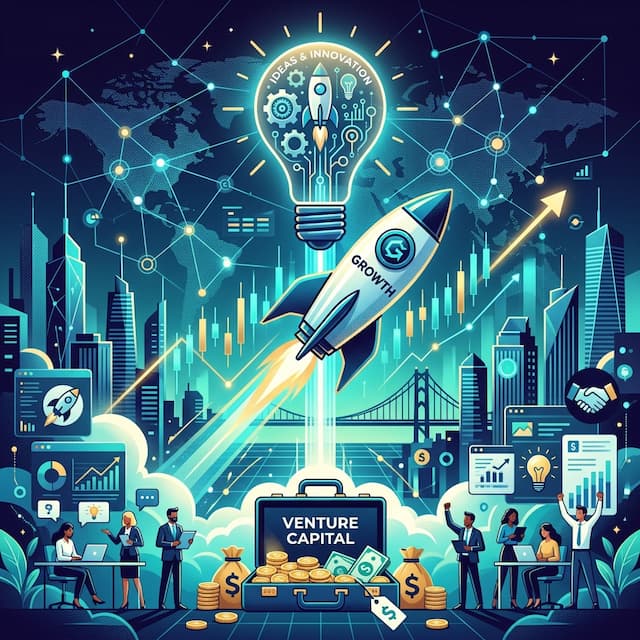
Q3. What is venture capital (VC)?
โ Answer: Private equity financing provided to early-stage, high-potential startups in exchange for equity ownership
VC firms invest large sums in startups they believe can deliver 10โ100x returns. Major Indian VC firms include Sequoia Capital India, Accel, and Tiger Global. Funding rounds progress from Seed โ Series A โ B โ C โ IPO/Exit. VCs typically expect to lose money on most investments but make it back from a few massive winners.
Q4. What is a pivot in business?
โ Answer: A fundamental shift in a company's business strategy, product, or target market based on market feedback
Famous pivots: Instagram started as Burbn (a check-in app), YouTube was originally a video dating site, Twitter was born from a podcasting platform called Odeo, and Slack evolved from a failed video game company. In India, Zomato pivoted from a restaurant directory to food delivery. Successful pivots require recognising that the original idea is not working and having the courage to change direction.
Q5. What is an elevator pitch?
โ Answer: A concise, persuasive summary of a business idea delivered in 30โ60 seconds โ the time of an elevator ride
A good elevator pitch answers: What problem do you solve? For whom? How is your solution different? What do you want (funding, partnership, customer)? Investors hear thousands of pitches โ the ability to articulate your vision clearly and concisely is often the difference between getting a meeting and being forgotten.
Q6. What is the difference between a startup and a small business?
โ Answer: A startup aims for rapid, scalable growth and often seeks venture funding; a small business aims for sustainable, steady profitability
A startup (like Zomato or Razorpay) builds scalable products/platforms designed to grow exponentially, often operating at a loss initially. A small business (like a local restaurant or shop) aims for profitability from day one and typically grows linearly. Both are valid paths โ 99% of businesses worldwide are small businesses, and they employ more people than startups.
Q7. What is disruption in business?
โ Answer: When a new product, technology, or business model fundamentally changes an existing industry, displacing established competitors
Coined by Harvard professor Clayton Christensen. Examples: Jio disrupted Indian telecom (free data destroyed incumbent pricing), Uber disrupted taxis, Netflix disrupted DVD rentals and cable TV, Airbnb disrupted hotels, and WhatsApp disrupted SMS. Disruptors typically start in underserved segments and gradually move upmarket until they overtake incumbents.
Q8. What is the lean startup methodology?
โ Answer: A business development approach based on Build-Measure-Learn cycles, using MVPs (Minimum Viable Products) to test assumptions quickly
Developed by Eric Ries in his 2011 book. Instead of spending years building a perfect product, lean startups build an MVP (simplest version), test it with real customers, measure results, and iterate. This reduces waste and increases the chance of finding product-market fit. Dropbox validated its idea with just a demo video before building the product.
Q9. What is an IPO (Initial Public Offering)?
โ Answer: The first time a private company sells its shares to the public on a stock exchange
Going public allows companies to raise large amounts of capital, provides liquidity for early investors, and increases brand visibility. Major Indian IPOs include LIC (โน21,000 crore, 2022), Zomato (โน9,375 crore, 2021), and Paytm (โน18,300 crore, 2021). IPOs require extensive regulatory compliance, audits, and disclosures under SEBI guidelines.
Q10. What is a minimum viable product (MVP)?
โ Answer: The simplest version of a product with just enough features to attract early adopters and validate a business hypothesis
The concept is central to the Lean Startup methodology. Famous MVPs: Airbnb started by renting air mattresses during a conference, Dropbox validated demand with a 3-minute demo video, and Zappos' founder took photos of shoes at local stores and posted them online (without holding any inventory) to test if people would buy shoes online. MVPs reduce risk by testing the market before heavy investment.
Q11. What is the "first-mover advantage"?
โ Answer: The competitive benefit gained by being the first company to enter a market or introduce a product
First movers can capture market share, build brand recognition, and establish customer loyalty before competitors arrive. Amazon in e-commerce and Google in search are classic first-mover successes. However, first-mover advantage is not guaranteed โ Friendster and MySpace lost to Facebook, and Yahoo lost to Google. Sometimes being a "fast follower" (learning from first-mover mistakes) is more effective.
Round 4: Marketing, Strategy & Growth
Great products need great marketing and strategy. This round explores SEO, branding, target markets, competitive advantages, and the strategic frameworks that help businesses grow and thrive.
Q1. What is a franchise?
โ Answer: A business model where a company (franchisor) licenses its brand, systems, and products to independent operators (franchisees)
McDonald's is the world's most famous franchise โ 93% of its 40,000+ restaurants are franchised. In India, popular franchises include Subway, Domino's, Lenskart, and Amul parlours. The franchisee pays an upfront fee + ongoing royalties (typically 4โ8% of revenue). Franchising reduces risk because you use a proven business model, but it limits creative freedom.
Q2. What is a monopoly?
โ Answer: A market structure where a single company dominates the entire market with no significant competitors
Pure monopolies are rare but examples include Indian Railways (rail transport), IRCTC (rail ticketing), and historically, Standard Oil (before it was broken up). Monopolies can lead to higher prices, lower quality, and reduced innovation because there is no competitive pressure. Anti-trust laws (like India's Competition Act 2002) exist to prevent monopolistic practices.
Q3. What is SEO (Search Engine Optimisation)?
โ Answer: The practice of optimising website content and structure to rank higher in search engine results, driving organic (free) traffic
SEO involves keyword research, on-page optimisation (title tags, meta descriptions, headings, content quality), technical SEO (site speed, mobile-friendliness, structured data), and off-page SEO (backlinks from other websites). Google processes over 8.5 billion searches per day. Ranking on the first page of Google can dramatically increase a business's visibility and revenue.
Q4. What is the difference between equity and debt financing?
โ Answer: Equity financing sells ownership (shares) in exchange for capital; debt financing borrows money that must be repaid with interest
Equity financing (VC, angel investors, IPOs) gives up ownership but does not require repayment. Debt financing (bank loans, bonds) preserves ownership but requires regular interest payments. Most businesses use a mix. Startups typically rely on equity early on (when they have no revenue for loan repayments), while established businesses leverage debt for its tax advantages (interest is tax-deductible).
Q5. What is a target market?
โ Answer: The specific group of consumers a business aims to reach with its products, services, and marketing efforts
Defining a target market involves segmentation by demographics (age, gender, income), psychographics (values, interests, lifestyle), geography, and behaviour. Trying to sell to "everyone" is a common startup mistake โ focused targeting is more effective. Zerodha targets young, tech-savvy investors; Tanishq targets affluent women; Zomato targets urban millennials who value convenience.
Q6. What is a competitive advantage?
โ Answer: A set of qualities that allows a company to outperform its competitors and generate superior value for customers and shareholders
Michael Porter identified three generic competitive strategies: cost leadership (Walmart, Jio), differentiation (Apple, Tesla), and focus (Rolls-Royce, luxury brands). Warren Buffett calls a sustainable competitive advantage a "moat" โ like a castle's moat protects it from invaders. Examples: Google's search algorithm, Amazon's logistics network, Coca-Cola's brand recognition.
Q7. What is e-commerce?
โ Answer: The buying and selling of goods or services over the internet
India's e-commerce market is projected to reach $200 billion by 2027. Major players include Amazon India, Flipkart (owned by Walmart), Myntra, Meesho, and Nykaa. Types include B2C (Amazon), B2B (IndiaMART), C2C (OLX), and D2C (direct-to-consumer brands like boAt, Mamaearth). The COVID-19 pandemic accelerated e-commerce adoption by 3โ5 years.
Q8. What is corporate social responsibility (CSR)?
โ Answer: A business model where companies integrate social and environmental concerns into their operations and interactions with stakeholders
India's Companies Act 2013 (Section 135) mandates that companies with net worth โฅโน500 crore, turnover โฅโน1,000 crore, or net profit โฅโน5 crore must spend at least 2% of average net profit on CSR activities. India was the first country to mandate CSR spending by law. Tata Group has been a pioneer, allocating 60% of Tata Sons' profits to charitable trusts.
Round 5: Finance, Funding & Impact
Understanding business finance is crucial whether you're founding a startup or managing your career. This round covers IPOs, cash flow, equity vs debt, CSR, and the financial metrics every business-minded person should know.
Q1. What is a balance sheet?
โ Answer: A financial statement showing a company's assets, liabilities, and shareholders' equity at a specific point in time
The fundamental equation: Assets = Liabilities + Shareholders' Equity. Assets include cash, inventory, property, and equipment. Liabilities include loans, accounts payable, and bonds. Shareholders' equity is the residual interest (what would be left if all assets were sold and all debts paid). Investors analyse balance sheets to assess financial health, solvency, and capital structure.
Q2. What is a cash flow statement?
โ Answer: A financial statement that shows the inflows and outflows of cash over a period, categorised into operating, investing, and financing activities
Cash flow is the lifeblood of any business โ profitable companies can still fail if they run out of cash ("profitable but illiquid"). Operating cash flow shows money from core business. Investing shows purchases/sales of assets. Financing shows debt and equity transactions. Investors often prioritise free cash flow (operating cash flow โ capital expenditures) as the truest measure of financial health.
Q3. What is the gig economy?
โ Answer: A labour market characterised by short-term, freelance, or contract work instead of permanent full-time employment
The gig economy includes ride-sharing drivers (Uber, Ola), food delivery workers (Swiggy, Zomato), freelancers (Upwork, Fiverr), and content creators. India's gig workforce is estimated at 77 million workers (2023). While it offers flexibility and independence, gig workers often lack benefits like health insurance, paid leave, and retirement contributions.
Q4. What is bootstrapping in business?
โ Answer: Starting and growing a business using only personal savings and revenue, without external investment
Bootstrapped companies include Zerodha (India's largest stockbroker, never raised VC funding), Mailchimp (sold for $12 billion without ever taking VC money), and Zoho (bootstrapped to $1 billion+ revenue). Bootstrapping forces disciplined spending and customer focus. The downside is slower growth โ well-funded competitors can outspend you on marketing and talent.
Q5. What is market capitalisation?
โ Answer: The total market value of a company's outstanding shares: Share Price ร Number of Shares
Market cap classifies companies: Mega-cap ($200B+), Large-cap ($10โ200B), Mid-cap ($2โ10B), Small-cap ($300Mโ2B), Micro-cap (<$300M). Apple was the first to reach $3 trillion market cap. In India, Reliance Industries, TCS, and HDFC Bank are the top 3 by market cap. Market cap does not equal company value โ enterprise value (which includes debt and subtracts cash) is a more complete measure.
Tips for Aspiring Entrepreneurs
- Solve a real problem โ The best businesses solve painful problems. Ask: who is struggling with what, and how can I make it easier?
- Start small, validate fast โ Build an MVP, test with real customers, and iterate. Do not spend years perfecting a product nobody wants.
- Learn to sell โ Every entrepreneur is a salesperson. Whether pitching to investors, hiring talent, or acquiring customers, selling is the one skill you cannot outsource.
- Read voraciously โ Read business biographies, case studies, and industry reports. Learn from others' successes and failures.
- Focus on cash flow, not just revenue โ Many businesses die not because they are unprofitable, but because they run out of cash. Cash is king.
Frequently Asked Questions
โ Who is the richest person in the world?
โ As of 2024, the title frequently alternates between Elon Musk (Tesla, SpaceX, X) and Bernard Arnault (LVMH). In India, Mukesh Ambani (Reliance Industries) and Gautam Adani (Adani Group) are the wealthiest individuals. Forbes and Bloomberg track real-time billionaire rankings.
โ What is a startup unicorn?
โ A unicorn is a privately held startup company valued at over $1 billion. The term was coined by venture capitalist Aileen Lee in 2013. India has over 100 unicorns including Flipkart, Byju's, Razorpay, and Zerodha. The US has the most unicorns globally, followed by China and India.
โ What are the 4 Ps of Marketing?
โ The 4 Ps of Marketing (Marketing Mix) are Product, Price, Place, and Promotion. Developed by E. Jerome McCarthy in 1960, this framework helps businesses develop effective marketing strategies by addressing what they sell, how much they charge, where they sell, and how they communicate with customers.
Test More Knowledge on QuizOxa
QuizOxa offers hundreds of free questions across Science, History, Football, Geography, and General Knowledge, with real-time timers, streak bonuses, and global leaderboards.
Our editorial team researches, writes, and fact-checks every article and quiz question. We reference established scholarly, scientific, and educational sources to ensure accuracy.